
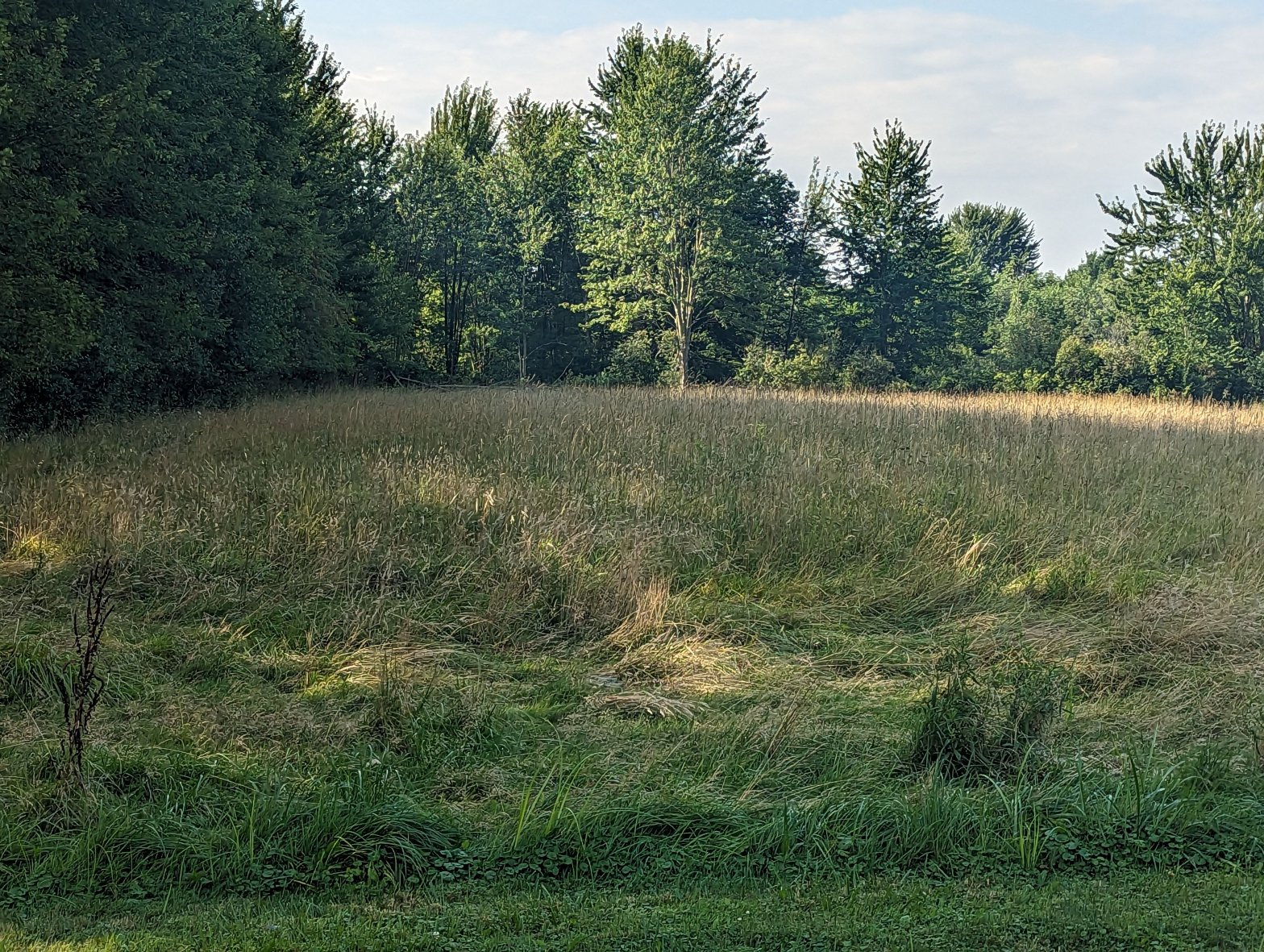

If you’ve noticed more ticks around your property in recent years, you’re not alone. Throughout Medina County and Wayne County, many homeowners are reporting increased tick activity, especially around wooded areas, overgrown fence lines, tall grass, brush piles, and unmanaged property edges.
As a company that regularly performs brush clearing, brush hogging, overgrown property cleanup, and vegetation management throughout Medina and Wayne Counties, we’ve seen firsthand how certain property conditions can create ideal habitat for ticks.
While no single solution will completely eliminate ticks, there are several strategies that can significantly reduce tick populations around your home, outbuildings, recreational areas, and walking paths.
In this guide, we’ll cover what attracts ticks, where they hide, and practical steps property owners can take to reduce their exposure.
What Attracts Ticks to a Property?
Ticks don’t appear randomly. They thrive in environments that provide moisture, shade, protection, and access to wildlife hosts.
Common tick habitat includes:
- Tall Grass
- Dense Brush
- Briar Patches
- Sapling Thickets
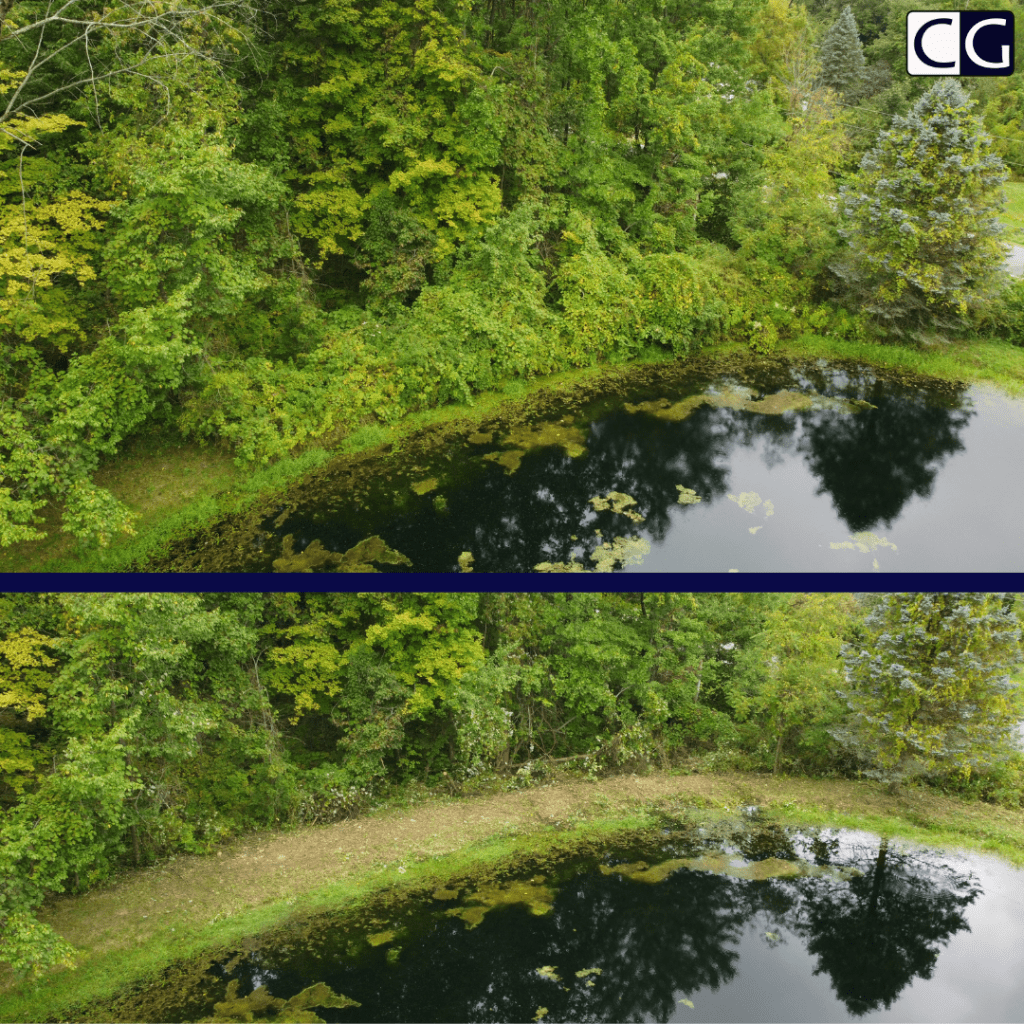
- Lake and stream edges
- Leaf Litter
- Overgrown flowerbeds
- Woodland Edges
- Brush Piles
- Areas frequented by deer, mice, and other wildlife
Throughout Medina and Wayne Counties, we often find the highest tick activity along transition zones where lawns meet wooded areas or overgrown vegetation.
Where Do Ticks Commonly Hide?
Common hiding places include:
Tall Grass: Ticks often wait near the tips of grass blades where they can easily attach to passing animals or people.
Woodland Edges: The border between woods and open lawn is one of the most common locations for ticks.
Leaf Litter: Leaves help ticks survive hot summer conditions as well as cold winter months
Overgrown Fence Rows: Many properties throughout Medina and Wayne Counties have fence lines that become overgrown with weeds, briars, saplings, and invasive vegetation. These areas frequently provide excellent tick habitat.
Brush Piles: Stacks of branches and debris often attract mice and other small animals that can carry ticks.

Do Tick Tubes Work?
In our experience, tick tubes can be a useful part of a larger tick management plan.
Tick tubes are typically placed around the property and contain treated nesting material that mice use to build nests. Because mice are a common host for immature ticks, reducing tick populations on mice can help interrupt part of the tick life cycle.
It’s important to understand that tick tubes are not a complete solution.
Properties with extensive overgrowth, dense brush, and unmanaged vegetation may still experience significant tick activity even when tick tubes are used.
For best results, tick tubes should be combined with habitat management and regular property maintenance.
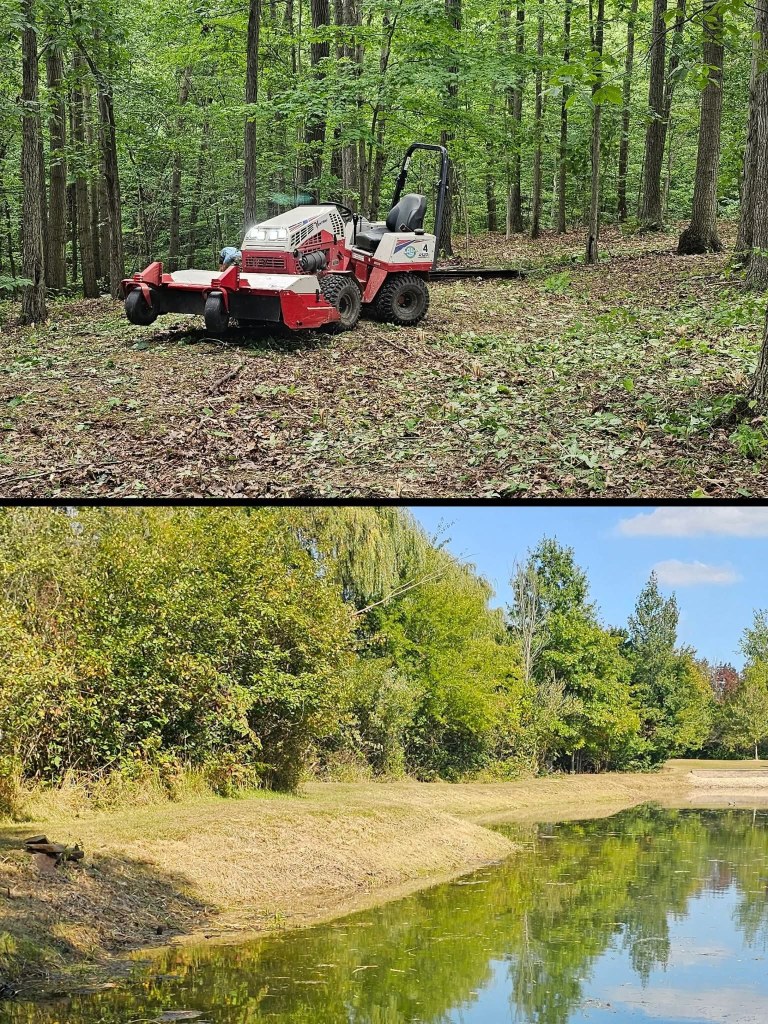
How Property Maintenance Can Help Reduce Tick Habitat
One of the most overlooked methods of tick control is simply making your property less attractive to ticks.
Ticks thrive where moisture, shade, and host animals are abundant.
By opening up overgrown areas and reducing dense vegetation, you can make conditions less favorable for ticks.
Brush Clearing
Removing saplings, briars, invasive brush, and dense undergrowth can improve airflow and sunlight penetration while reducing areas where ticks commonly hide.
Brush Hogging
Tall grass provides ideal conditions for ticks.
Brush hogging large fields, overgrown lots, and neglected areas can help reduce habitat while making the property more usable.
Overgrown Property Cleanup
Many properties accumulate years of unmanaged growth around fence lines, woodland edges, drainage areas, and outbuildings.
Cleaning up these areas can significantly improve visibility and reduce wildlife travel corridors near frequently used spaces.
Overgrown Flower Beds
Large unmanaged landscape beds often become hiding places for rodents and ticks.
Regular maintenance can help reduce these conditions.
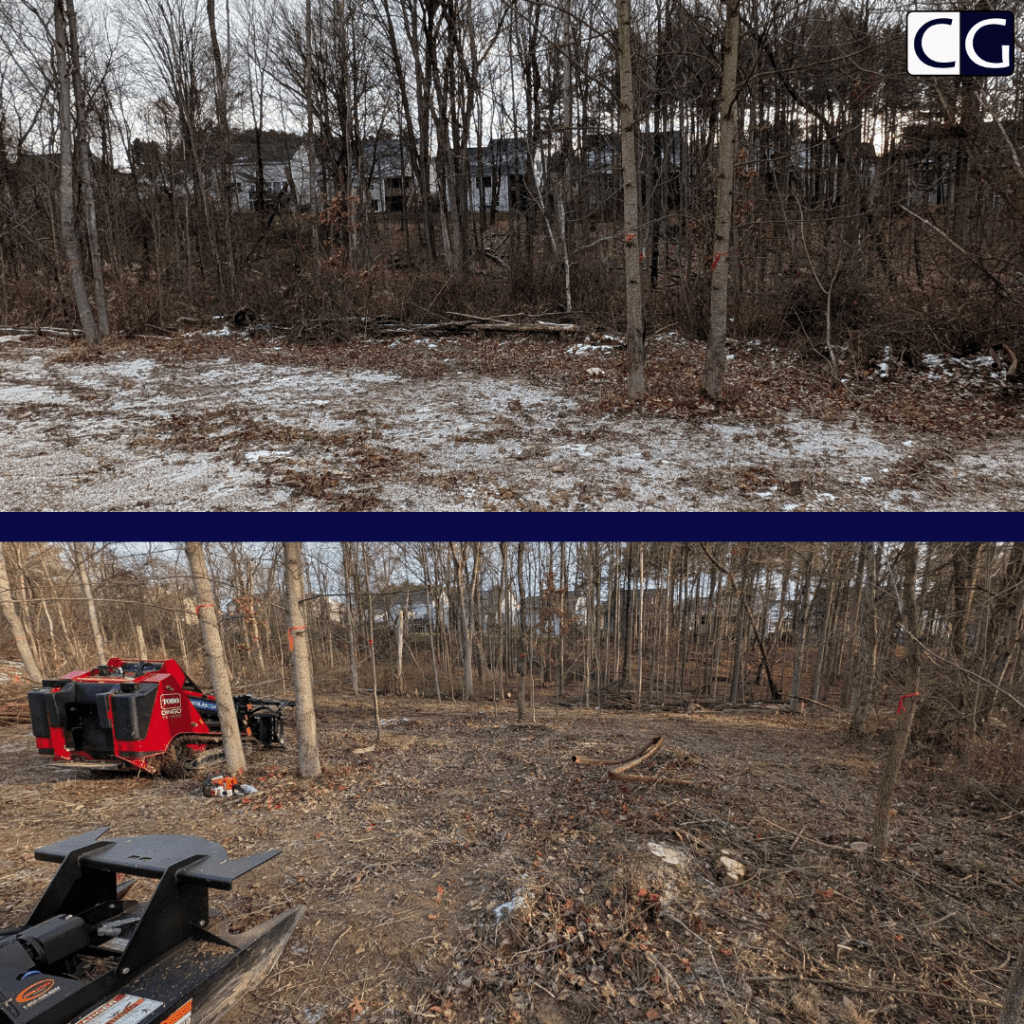
Creating a Tick-Resistant Property
Ticks are everywhere, especially in Medina and Wayne County, Ohio.
However, homeowners can reduce risk by focusing on several key areas:
Maintain Grass Regularly
Avoid allowing grass to become excessively tall.
Reduce Dense Vegetation
Pay special attention to fence rows, woodland edges, and neglected corners of the property.
Remove Brush Piles
Dispose of fallen limbs and accumulated debris when possible.
Manage Leaf Accumulation
Especially in heavily wooded areas.
Use Tick Tubes Strategically
Focus on areas where mice are likely to travel.
Maintain Walking Paths
Keep trails and commonly used areas clear of encroaching vegetation.
What We See Most Often on Properties in Medina & Wayne Counties
After working on properties throughout Medina, Wadsworth, Seville, Lodi, Valley City, Hinckley, Sharon Center, Wooster, West Salem, and surrounding communities, we’ve noticed a common pattern.
The properties with the greatest tick activity often have:
- Tall unmanaged grass
- Dense brush growth
- Limited sunlight reaching ground level
- Overgrown fence lines
- Leaf accumulation
- Thick sapling growth
Meanwhile, regularly maintained properties tend to have fewer areas that support tick populations.
While maintenance alone won’t eliminate ticks, it can be an important part of reducing suitable habitat.
It is important to note that while less frequent, it is not uncommon for us to find them at houses in the middle of developments.

Brush Clearing and Overgrown Property Cleanup Services in Medina & Wayne Counties
For property owners dealing with heavily overgrown areas, brush clearing and vegetation management may help improve both the appearance and usability of the property while reducing areas where ticks commonly hide.
At Cleaner Grounds LLC, we provide:
- Brush Clearing
- Overgrown property cleanup
- Fence row cleanup
- Overgrown flowerbed restoration
- Brush Hogging
- Sapling removal
- Briar removal
- Vegetation management
We serve homeowners, landowners, commercial and industrial properties throughout Medina County and Wayne County.
Contact Us
Call 330-819-3848 or click “Get Quote” to request an estimate.
Are ticks common in Medina County, Ohio?
Yes. Ticks are commonly found throughout Medina County, especially in wooded areas, tall grass, overgrown vegetation, and wildlife corridors.
Does mowing help reduce ticks?
Regular mowing can help reduce tick habitat by limiting tall grass where ticks commonly wait for hosts.
Does brush clearing eliminate ticks?
No. Brush clearing is not a complete solution, but it can reduce favorable habitat and make an area less attractive to ticks.
Where are ticks most commonly found?
Ticks are most commonly found in tall grass, woodland edges, leaf litter, brush piles, and dense vegetation.
Do tick tubes work?
Tick tubes may help reduce certain tick populations when used as part of a broader property management strategy.
What time of year are ticks most active in Ohio?
Ticks can be active during much of the year, but activity often increases during spring, summer, and fall.
AUTHOR BIO
About Cleaner Grounds LLC
Cleaner Grounds LLC provides brush clearing, brush hogging, overgrown property cleanup, and landscape services throughout Medina and Wayne Counties, Ohio. Our team works with homeowners and property owners to restore neglected areas, improve property usability, and manage overgrown vegetation.