
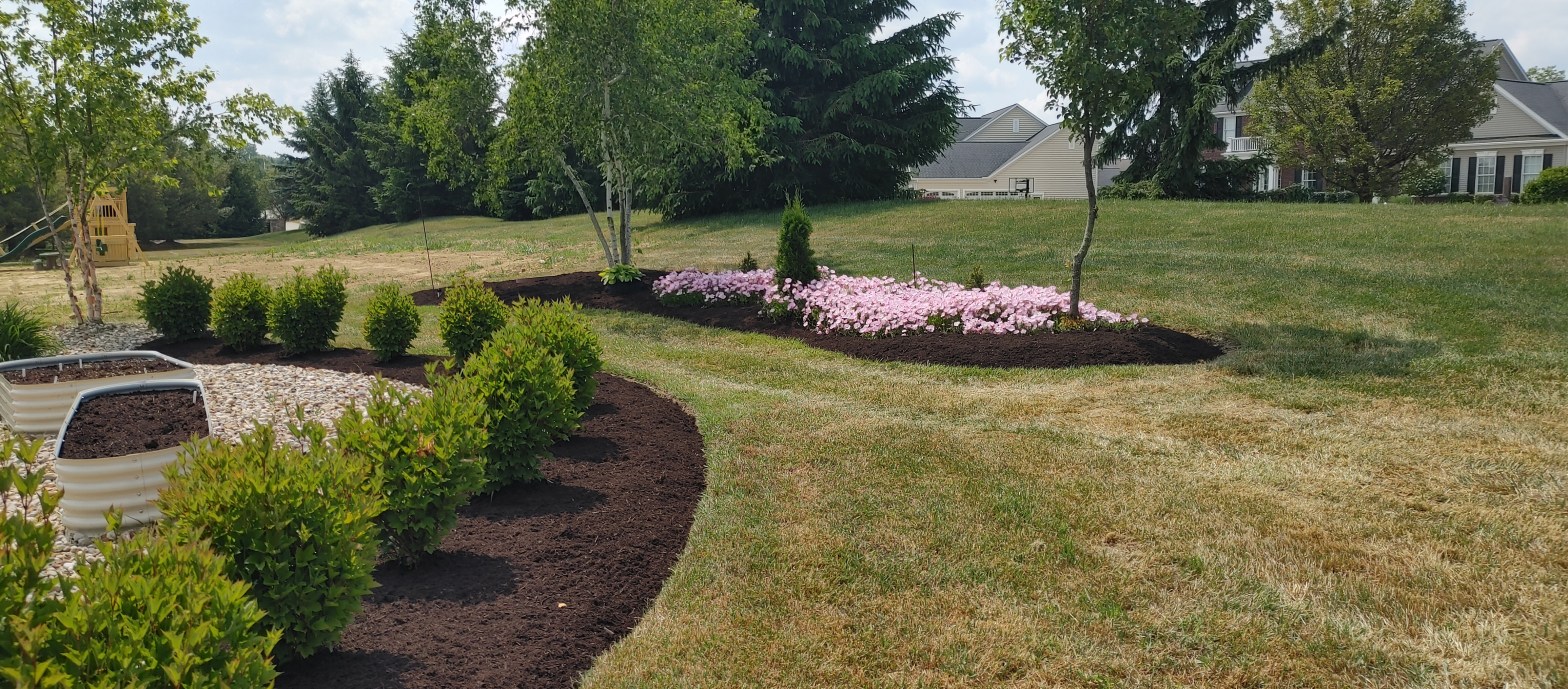
Almost every landscape installation customer we meet asks for the same thing:
“I want something that looks nice but doesn’t require a lot of maintenance.”
The good news is that creating a low-maintenance landscape is absolutely possible.
The bad news is that there is no such thing as a maintenance-free landscape.
Every landscape will require some watering while plants become established, occasional pruning, seasonal cleanup, and general upkeep. The goal is not to eliminate maintenance entirely. The goal is to design a landscape that stays attractive without constant trimming, replacing plants, or fighting aggressive growth.
After installing landscapes throughout Medina and Wayne County, we’ve found that the best low-maintenance landscapes start with proper planning long before the first plant goes in the ground.
The Secret to a Low-Maintenance Landscape Isn’t a Specific Plant
One of the biggest mistakes homeowners make is focusing on individual plants instead of the overall design.
A successful low-maintenance landscape is designed with plants that grow to a manageable size, don’t aggressively spread, and provide a mix of summer and winter interest without requiring constant upkeep.
When designing a landscape, we typically use a layered approach:
- Larger plants in the back row
- Medium-sized plants in the middle
- Smaller plants toward the front
- A specimen plant as a focal point
This creates depth, visual interest, and a landscape that looks intentional as it matures.
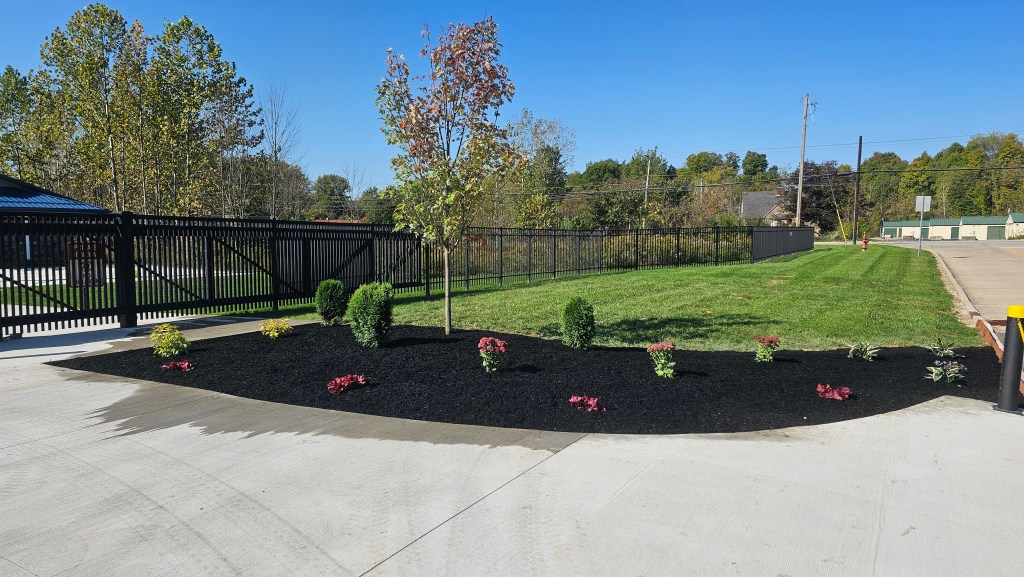
The Common Mistake We See
A common issue we find in established beds is the plants have all grown together.
When plants are first installed, they are small. It’s normal for landscape beds to look open.
Many homeowners try to fill every empty space immediately.
Five years later, those same plants have grown together and become difficult to maintain.
Instead of enjoying each plant individually, everything blends into one large mass of vegetation.
It’s usually much better to allow plants room to grow and use annual flowers to temporarily fill empty spaces while permanent plants mature.
The landscape may look slightly more open initially, but it will require significantly less maintenance over time.

Our Favorite Low-Maintenance Shrubs
Spirea
Spirea is one of our favorite low-maintenance shrubs.
Some of our favorite varieties include:
- Double play candy corn
- Double play doozie
Why we like them:
- Excellent seasonal color
- Easy to maintain
- Simple pruning needs
- Great fit for many designs
Spirea provides a lot of visual impact without demanding constant attention.

Little Giant Arborvitae
When customers want evergreen structure without excessive maintenance, Little Giant Arborvitae is often one of our first recommendations.
Benefits include:
- Compact size
- Evergreen color year round
- Minimal trimming requirements
- Excellent foundation plant
Unlike larger arborvitae varieties, Little Giant Arborvitae is less likely to outgrow its space.
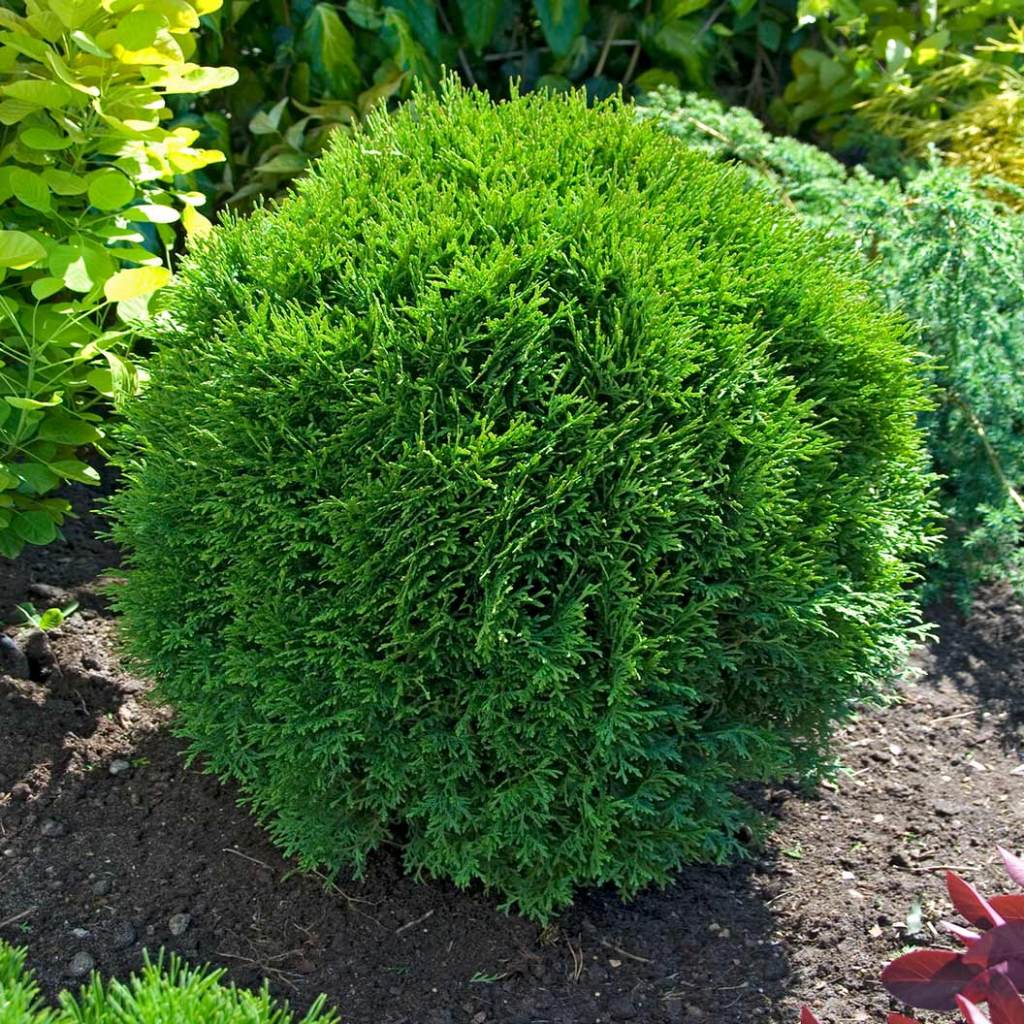
Bowling Ball Arborvitae
Bowling Ball Arborvitae is another excellent low-maintenance option.
We recommend it because it:
- Naturally maintains its shape
- Requires very little trimming
- Stays small
- Provides year round interest
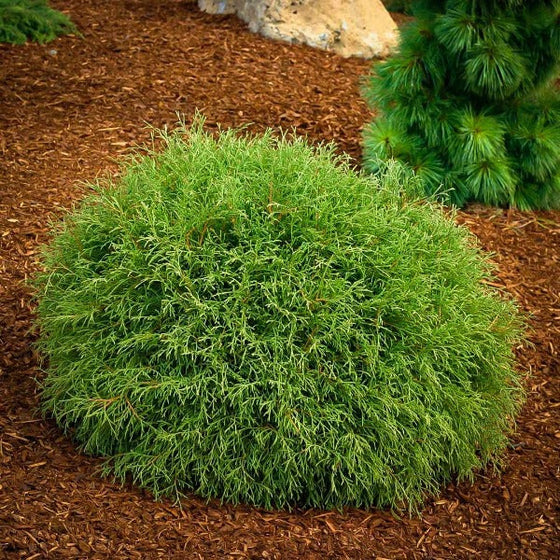
Hydrangeas
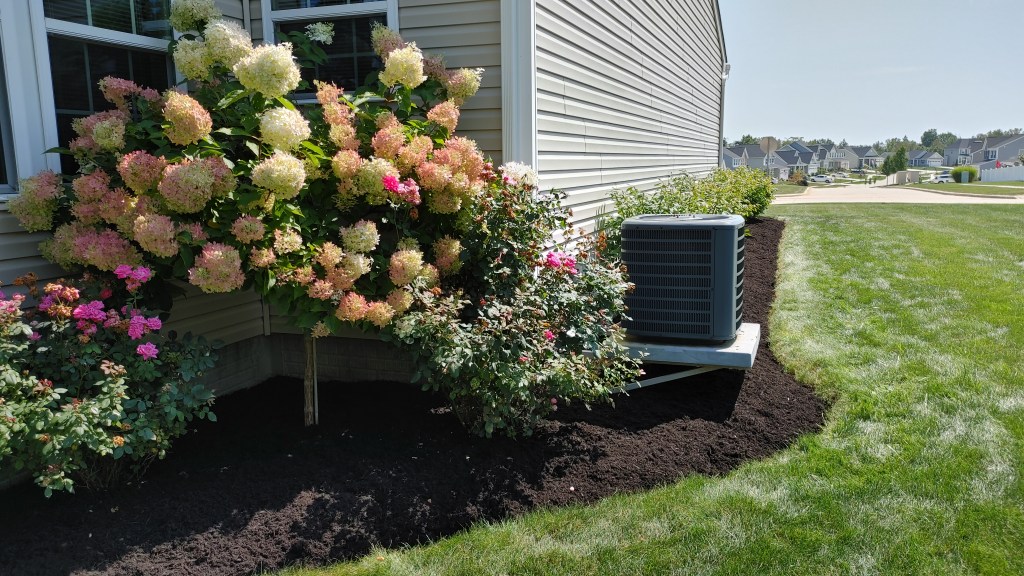
Hydrangeas remain one of the most popular flowering shrubs we install.
Some varieties we frequently recommend include:
- Annabelle Hydrangea
- Bobo Hydrangea
- Limelight Hydrangea
They provide beautiful blooms while still being relatively easy to maintain when planted in appropriate locations.
Great Filler Plants for Low-Maintenance Landscapes
Filler plants help soften a landscape and add texture without overwhelming the design.
Some of our favorites include:
Sedum
Sedum is durable, attractive, and has performed well for many of our customers.
Coral Bells
Coral Bells offer excellent foliage color and perform well in many partially shaded areas.
Small Ornamental Grasses
Smaller grasses such as Beyond Blue can provide texture and movement without creating the maintenance issues often associated with larger ornamental grasses.

Specimen Plants That Create a Focal Point
A specimen plant acts as the visual centerpiece of a landscape.
Some of our most popular choices include:
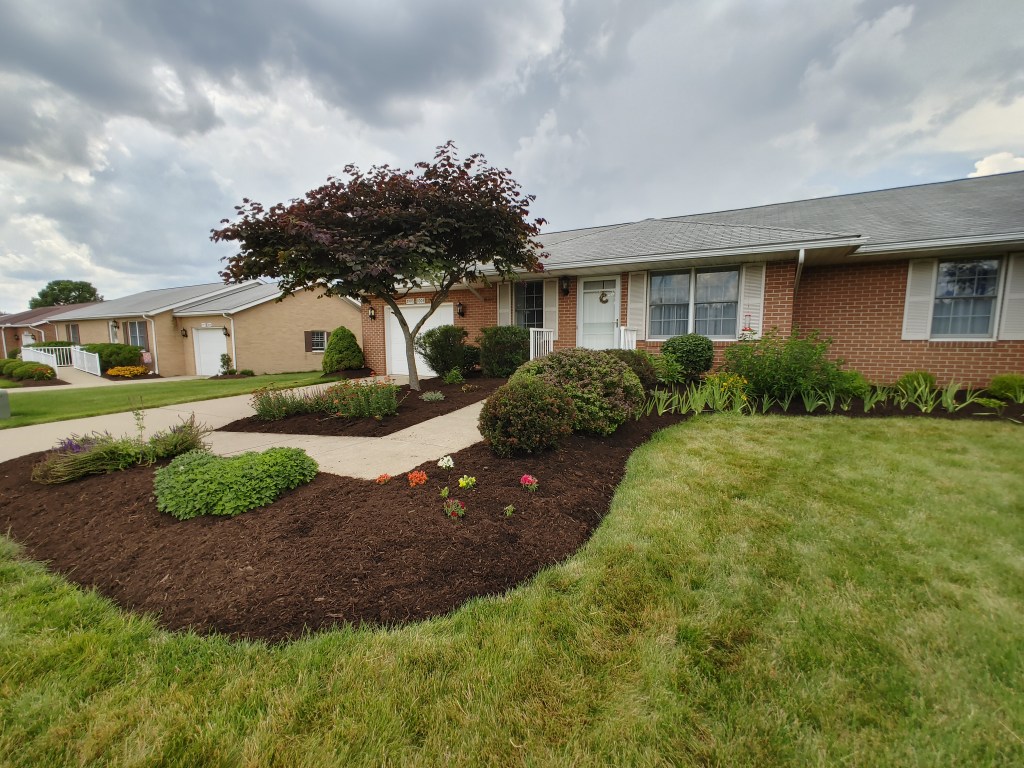
Japanese Maple
The most commonly requested specimen tree.
Japanese Maples provide unique color, texture, and structure.
Hydrangea Tree
Hydrangea trees provide dramatic blooms and serve as excellent focal points.
River Birch
River Birch trees offer beautiful bark and year-round interest.
Flamethrower Redbud
For homeowners looking for something different, Flamethrower Redbud can create a striking visual statement.
Plants We Are Careful About Recommending
Not every plant is a good fit for every property.
Aggressive Ground Covers
We are generally cautious about plants that spread aggressively.
While they may look attractive initially, they can become difficult to control over time.
Instead, we often recommend slower-growing alternatives such as Phlox.
Thorny Plants Around Children
If young children regularly use the yard, we often avoid plants such as:
- Rose bushes
- Barberry
Both can create unnecessary headaches when kids are playing nearby.
Green Giant Arborvitae
Green Giant Arborvitae is an excellent plant when used properly.
However, we frequently see them planted too close to homes.
Over time, they can easily outgrow the available space.
Always consider what a plant will look like in 5-10 years, not just the day it is installed
Deer Considerations
Many homeowners in Medina and Wayne County deal with deer pressure.
No plant is truly deer-proof.
If deer become hungry enough, they will try almost anything.
However, we’ve generally had good luck with:
- Sedum
- Spirea
- Smaller Arborvitae varieties
Plants that deer commonly target include:
- Hostas
- Lower branches of Arborvitae
- Young trees that can be damaged by rubbing
Understanding local deer pressure can help you make better planting decisions.
Mulch or River Rock?
Many homeowners ask whether mulch or river rock is better.
The answer is often both.
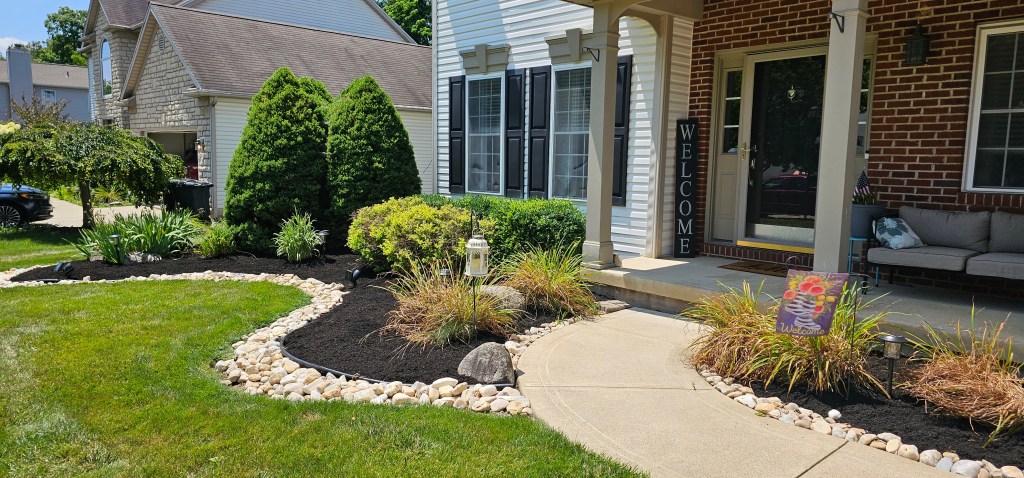
Some of our favorite designs combine multiple materials.
Examples include:
- River rock around specimen trees
- Decorative dry creek beds
- River rock in the back row with mulch in the front
- Accent areas that break up large mulch beds
Combining materials can add visual interest while still maintaining a clean appearance.
Watering New Plants Properly
Even low-maintenance plants require attention during establishment.
As a general rule, we recommend watering new plantings for at least one full growing season.
A simple approach is:
- Daily for the first week
- Every other day for the second week
- Gradually increase the interval between waterings
The goal is to keep the soil damp, not saturated.
An easy test is to stick your finger into the soil.
If your finger comes out dry, it’s time to water.
After the first few weeks, deeper and less frequent watering is usually preferable to frequent shallow watering because it encourages deeper root growth.
If This Were My House
If I were designing a low-maintenance landscape for my own home, I would likely start with
Back Row:
- Little Giant Arborvitaes
Middle Layer:
- Spirea
- Small Hydrangeas
- Fire Chief Arborvitae
- Gold Mop False Cypress
Front Layer:
- Sedum
- Coral Bells
- Small Ornamental Grasses
Specimen Plant:
- Flamethrower redbud
- Hydrangea Tree
- River Birch
The exact combination depends on the house, sunlight conditions, and the homeowner’s preferences, but this type of design typically provides a strong balance of color, structure, seasonal interest, and manageable maintenance.
Need Help Designing a Low-Maintenance Landscape?
Every property is different, and the best landscape design depends on your goals, sunlight conditions, maintenance expectations, and budget.
Cleaner Grounds LLC provides landscape design and installation services throughout Medina and Wayne Counties. Whether you’re starting from scratch or updating an existing landscape, we can help create a landscape that looks great without becoming a maintenance burden.
Contact us today for a free estimate and consultation. Click “Start Quote” or give us a call at 330-819-3848